
Copenhagen Travel Guide: Danish Hot Dogs, a Nyhavn Canal Tour, and the Best Things to Do
What we loved about two days in Copenhagen: red Danish hot dogs from a street stand, the colorful Nyhavn harbor, an hour-long canal tour past the Opera House and the royal yacht, plus easy day trips and tips for traveling with every generation.
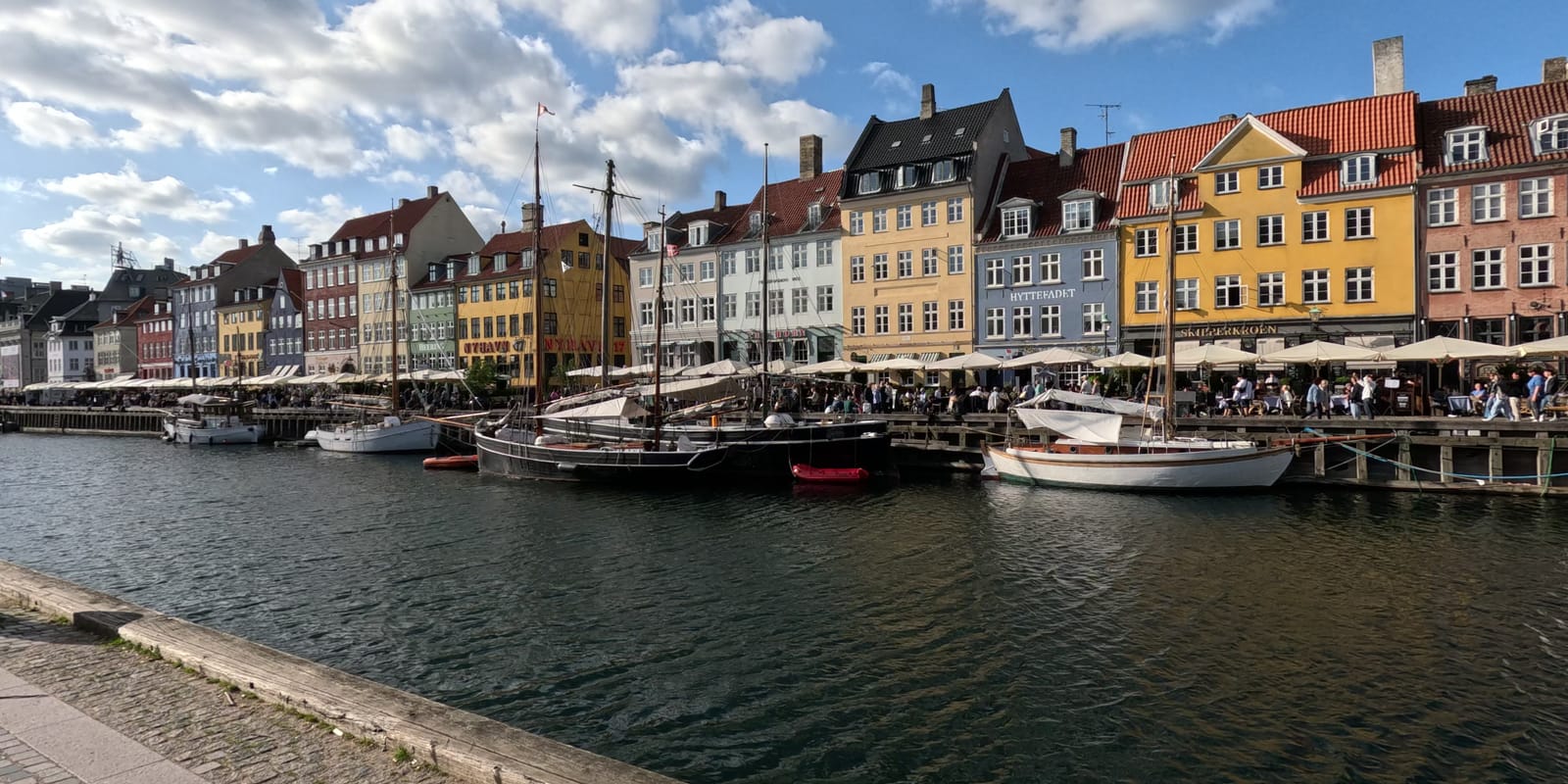
In June 2025, we spent two days exploring Copenhagen, and it quickly became one of our favorite cities in Europe. We walked from Central Station past City Hall Square and down Strøget, the long pedestrian shopping street, to the colorful harbor at Nyhavn. We took a canal tour as the late-afternoon light hit the water, and the next morning we walked across the harbor to Christianshavn.
Copenhagen is easy to love: compact, flat, friendly and full of small cultural traditions you won’t find anywhere else. Here’s what we’d tell any family planning a visit, starting with the one thing you absolutely have to eat.
The Danish hot dog: Copenhagen’s favorite street food
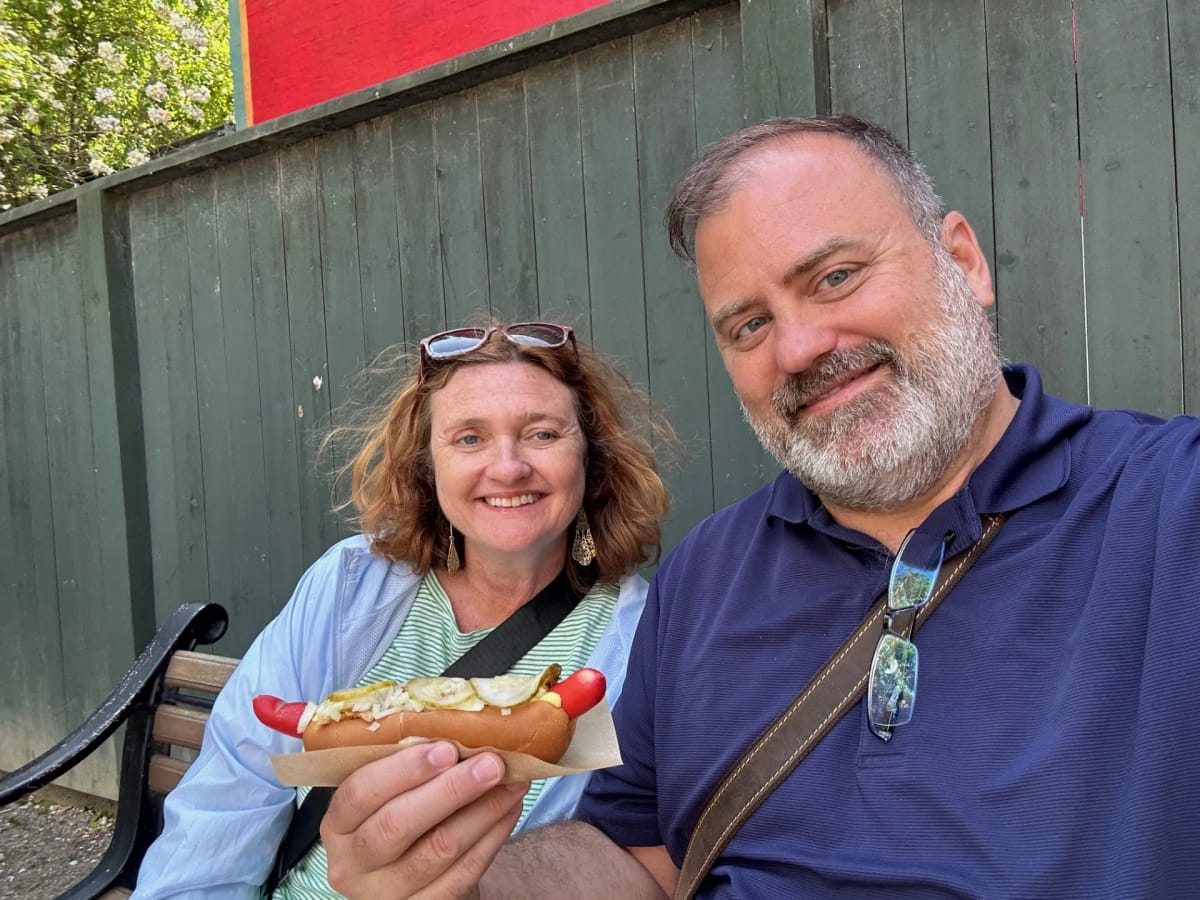
Forget fancy restaurants for a moment. The most Danish meal you can eat in Copenhagen comes from a hot dog stand. Danes call the stands pølsevogne (sausage wagons), and they’ve been a fixture on Copenhagen’s streets and squares since the 1920s. They’re fast, inexpensive, and as much a part of local life as bicycles.
The classic is the rød pølse, a boiled sausage with a startling bright red skin. One story says butchers once dyed older sausages red so they’d sell first; today the color is simply tradition. It’s served in a soft bun, or the sausage comes on a paper tray with the bread on the side.
What makes it Danish is the toppings. Ask for it “med det hele” (with everything) and you’ll get:
- Ketchup and a mild, sweet Danish mustard
- Remoulade, a creamy, pale yellow sauce with chopped pickles that Danes put on almost everything
- Raw chopped onions and crispy fried onions (ristede løg)
- Thin slices of sweet-and-sour pickled cucumber laid along the top
Other favorites include the ristet hotdog (a grilled sausage, usually with the same toppings) and the fransk hotdog, a French-style version where the sausage is pushed into a hollowed-out baguette filled with dressing. For the full local experience, wash it down with a Cocio, the chocolate milk Danes have paired with hot dogs for generations.
Stands are easy to find around City Hall Square, along Strøget, and near the big squares and train stations. If you’d like an organic version, DØP (short for “the organic sausage man” in Danish) runs well-known stands near the Round Tower. A hot dog on a bench is a perfect, budget-friendly lunch between sights, and it’s an easy win with kids and picky eaters.
Nyhavn: Copenhagen’s postcard harbor
Nyhavn (“New Harbor”) was dug in the 1670s, and its row of brightly painted 17th- and 18th-century townhouses is the picture most people have of Copenhagen. Wooden sailing ships line the canal, and the fairy-tale author Hans Christian Andersen lived in three different houses along it.
The sunny side of the canal is lined with restaurants and outdoor tables. They’re lively and scenic, and priced to match. Many locals and visitors do it differently: grab a drink or a snack and sit along the edge of the quay with your feet over the water. On a summer evening the whole harbor fills up with people doing exactly that.
Nyhavn is busiest in the late afternoon and evening, so if you want photos without the crowds, go early in the morning.
The canal tour: the best first hour in Copenhagen
If you only do one tour in Copenhagen, make it a canal tour. The open-top boats leave from Nyhavn and from Gammel Strand, near the old town, and the classic guided tour takes about an hour. It’s a relaxing way to see a lot of the city without walking, which makes it ideal for grandparents and little ones, and it’s a great way to get your bearings on your first day.
From the water we saw the modern Copenhagen Opera House across the harbor, the canals of Christianshavn, and the Danish royal yacht Dannebrog, which happened to be moored in the harbor that day. Tours usually pass the Little Mermaid statue too, which is much easier to see from a boat than in the crowd on shore.
- Bring a jacket, even in summer. It’s breezy on the water, and you’ll notice in our video that plenty of people were wrapped up.
- Stay seated under the bridges. Some are very low, and the guide will warn you.
- Boarding means stepping down into a low, open boat. If anyone uses a wheelchair or has trouble with steps, ask the tour company about accessible boats before you go.
- Late afternoon is lovely: in June the sun doesn’t set until around 10 p.m., so the light lasts for hours.
More fun things to do in Copenhagen
- Tivoli Gardens: one of the world’s oldest amusement parks, open since 1843, right next to Central Station. Gardens, gentle rides, thrill rides, and evening lights make it a true every-generation stop.
- Strøget and the Round Tower: stroll the pedestrian shopping streets, then climb the 17th-century Round Tower (Rundetårn), which has a wide spiral ramp instead of stairs for most of the way up.
- Rosenborg Castle: a Renaissance castle in the King’s Garden, home to the Danish crown jewels.
- Changing of the guard at Amalienborg: the Royal Life Guards change the guard at the royal palace at noon every day.
- Christiansborg Palace tower: free views over the city’s rooftops and spires from the tallest tower in the old town.
- Christianshavn: walk or bike across the harbor bridges to this canal-lined neighborhood of houseboats, cafés, and the twisting spire of the Church of Our Saviour.
- Smørrebrød: Denmark’s open-faced sandwiches on dark rye bread, piled with herring, shrimp, roast beef or egg. The food halls at Torvehallerne are a great place to try several.
- Danish pastries: the cinnamon swirl (kanelsnegl) is a morning must.
- Harbor swimming: in summer, Copenhageners swim in the clean harbor at public harbor baths like Islands Brygge.
- Ride like a local: Copenhagen is one of the world’s great bike cities, and renting bikes for an afternoon is a fun way to cover ground.
Easy day trips from Copenhagen by train
Denmark’s trains are clean, comfortable and simple to use, so day trips are easy even without a car. Travel times are approximate:
- Kronborg Castle in Helsingør (about 45 minutes): the Renaissance castle that inspired Hamlet’s Elsinore, and a UNESCO World Heritage Site overlooking the sea.
- Louisiana Museum of Modern Art in Humlebæk (about 35 minutes, on the same coastal line): world-class art in a sculpture garden on the water. Easy to combine with Kronborg.
- Frederiksborg Castle in Hillerød (about 40 minutes): a fairy-tale castle on a lake with formal gardens.
- Viking Ship Museum in Roskilde (about 25 minutes): five original Viking ships, and in summer, kids can climb aboard reconstructed ones.
- Malmö, Sweden (about 35 to 40 minutes): cross the Øresund Bridge to add a second country to your trip. Bring your passport, since Sweden may check IDs.
Tips for a Copenhagen trip with every generation
- Getting in is easy. The metro runs from the airport to the city center in about 15 minutes.
- The city is flat, but watch the cobblestones. Nyhavn and the old squares are paved with uneven stones, so wear comfortable shoes and consider a cane or walker with good wheels.
- Respect the bike lanes. Bikes move fast and there are a lot of them. Look both ways before stepping off the curb, and keep the kids close.
- Plan one big thing a day. Pair a castle or Tivoli with an easy afternoon, like a canal tour or a hot dog on a bench.
- Money: Denmark uses the Danish krone (DKK), not the euro. Cards and phone payments are accepted almost everywhere, and tipping isn’t expected because service is included.
- Look at the Copenhagen Card, which covers public transportation and admission to many attractions. It can be a good value if you’ll see several sights.
- English is spoken almost everywhere, which makes Copenhagen an easy first trip to Scandinavia.
- Sailing from Copenhagen? It’s a major port for Norway, Baltic and Northern Europe cruises. Arrive at least two days early so a flight delay can’t cost you the cruise, and so you have time to enjoy the city.
- Denmark is one of the countries that will require ETIAS, Europe’s new travel authorization, once it launches.
Quick answers
What is a Danish hot dog?
Usually a bright red boiled sausage (rød pølse) in a bun, topped with ketchup, mustard, remoulade, raw and crispy fried onions, and pickled cucumber slices. Danes buy them from street stands called pølsevogne.
How long is a Copenhagen canal tour?
The classic guided canal tour takes about an hour. Boats leave from Nyhavn and Gammel Strand, and the route usually passes the Opera House, Christianshavn and the Little Mermaid.
Is Copenhagen good for a multigenerational trip?
Yes. The city is compact and flat, English is widely spoken, and there’s something for every age, from Tivoli Gardens and canal tours to castles and museums. Plan for cobblestones and busy bike lanes.
What currency does Copenhagen use?
Denmark uses the Danish krone (DKK), not the euro. Cards and phone payments are accepted almost everywhere, and tipping isn’t expected.
Let me plan your Copenhagen trip
Whether Copenhagen is the start of a Northern Europe cruise, a stop on a Scandinavian rail trip, or a long weekend of its own, I’d love to help you plan it: the right hotel near the harbor, a canal tour on your first afternoon, a day trip to Kronborg, and plenty of time for a hot dog on a bench. As always, there’s no planning fee.